
The Short Answer
No, battery backup isn't required by any blanket building code — but if you live in Hampton, Starke, or anywhere in Bradford County, you probably want one anyway. That's the one-sentence version to text your spouse. Here's the rest, for whoever needs to see the receipts.
How Battery Backup Actually Works
A battery backup system is a sealed battery, usually mounted right next to or inside the opener's motor unit, that automatically kicks in the instant your home loses power. You won't flip a switch or do anything — the opener just keeps working as if nothing happened. Press the remote, the door opens or closes like normal.
What it won't do is run your whole house, or even run the opener forever. Most backups are rated for a set number of open-close cycles over roughly 24 hours — enough to get your car out before a storm, or get the door shut after you've pulled in, not enough to treat it as a daily convenience during a multi-day outage.
Is It Actually Required?
There's no universal rule forcing every garage door opener to have battery backup. What's changed is that several major opener brands now build it into their mid-tier and higher models as standard equipment, partly because power outages tied to storms have become a normal part of life for a lot of Florida homeowners. So if you bought a newer opener in the last several years, there's a decent chance you already have one and don't realize it — which, incidentally, settles a lot of these spousal debates on its own.
Why This Matters Where You Live
During hurricane season, power outages aren't a rare inconvenience — they're a predictable event. If a storm knocks out power while your car is still in the garage, a battery backup means you're not standing there cranking the emergency release cord in the rain trying to get the vehicle out before conditions get worse. The same goes in reverse: if you're racing to get the car inside before a line of storms hits, backup power means the door still responds.
There's a second, less obvious reason backup power matters here. Humidity and moisture swelling can make garage doors heavier and stiffer to operate manually, especially wind-load-rated doors, which are already built heavier to meet storm standards. Manually lifting a swollen, wind-rated door during a power outage is a real workout — not something you want to discover for the first time during an actual storm.
What Battery Backup Won't Fix
It's worth being honest about the limits, because this is usually where the other spouse has a point. Battery backup only solves the power problem. It does nothing for:
- A broken spring — if the spring snaps, the opener has no power to lift against, battery or not
- A door that's off its tracks
- Frayed or snapped cables
- Rust or corrosion on rollers and hardware, which shows up faster here thanks to salt air and humidity
If your door won't move and you've already confirmed there's power to the opener, the battery backup argument is moot — something mechanical has failed, and that's a different repair entirely.
How to Check What You Already Have
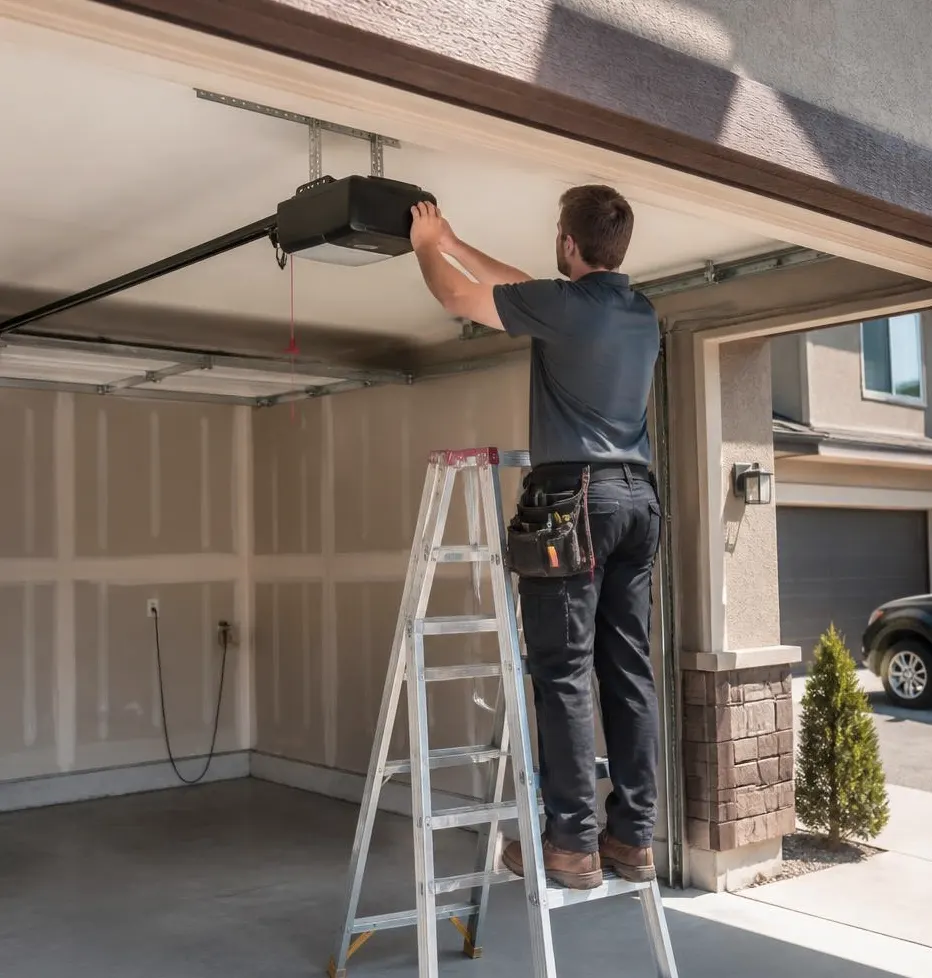
Look at the opener unit itself — the box mounted on the ceiling with the motor. A battery backup unit is usually a separate compartment attached to or built into that housing, sometimes with a small indicator light. If you're not sure, the model number (usually on a sticker on the unit) can be looked up against the manufacturer's spec sheet. If your opener is more than eight or ten years old, it's less likely to have backup power built in, and the batteries in older backup units lose capacity over time even when present — they're generally good for one to three years before they need replacing, which is easy to forget until the day you need it.
When to Call Hampton Garage Door Pro
If you've checked and your opener doesn't have battery backup, or the battery is old and you're not confident it'll hold a charge through hurricane season, that's worth addressing before storms roll through rather than after. We handle garage door opener installation, including upgrading older units to models with built-in backup power, and we offer garage door maintenance and tune-ups that check the whole system — springs, cables, tracks, and opener — so you're not relying on battery backup to cover for a mechanical problem that's already developing.
If you're in Hampton, Starke, Keystone Heights, Waldo, Melrose, Lawtey, Brooker, or Earleton and want your garage door system actually storm-ready before the next outage hits, call Hampton Garage Door Pro. We'll check what you've got, tell you straight whether you need an upgrade, and get it handled fast.