
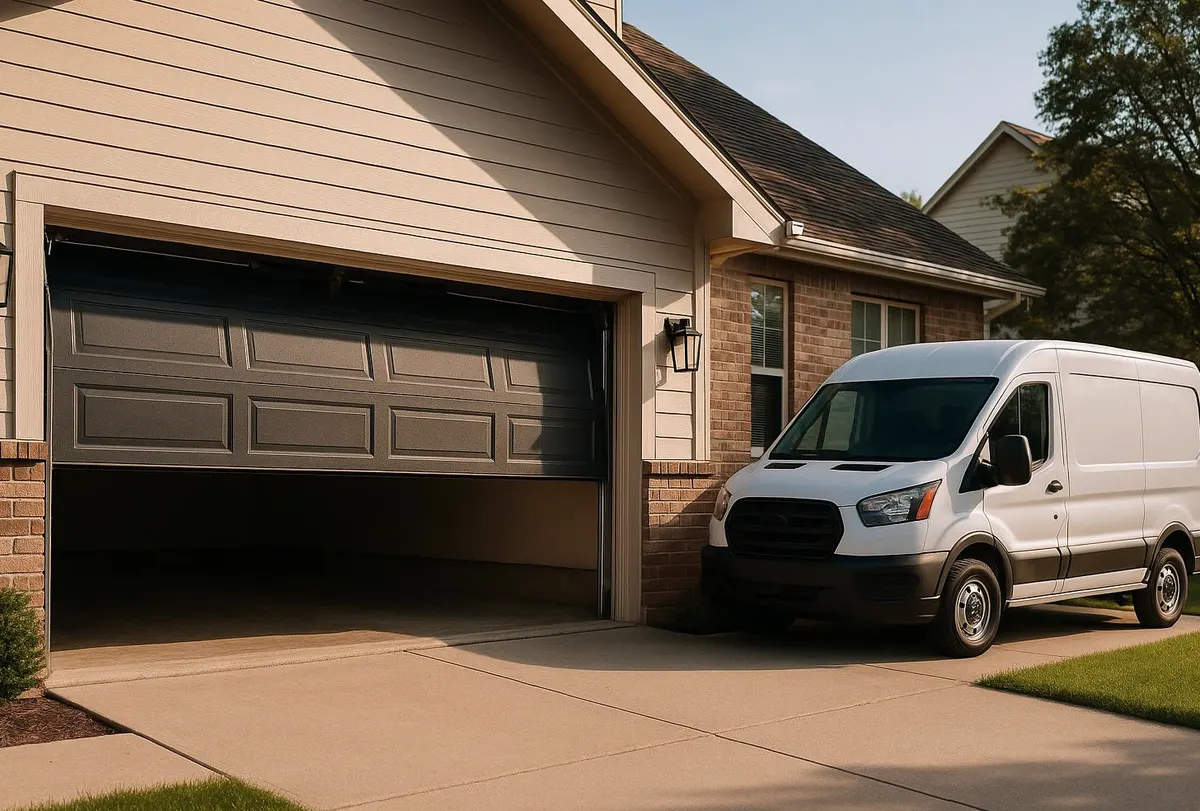
The Lights Flicker, the Garage Door Won't Move
You're in the garage, truck idling or the kids loading up, and the storm that's been building all afternoon finally knocks the power out. You hit the wall button or click the remote and nothing happens. The door just sits there, dead weight, and now you're trying to figure out how to get the car out or shut the door before rain blows sideways into the garage. This happens a lot during Florida's storm season, and almost every garage door opener is built with a manual backup for exactly this moment.
Tools You'll Need
- A stepladder or stool tall enough to reach the trolley rail
- A flashlight or headlamp, since an outage often means no overhead light either
- Work gloves, especially if the door has been sitting in humid, salty air and the track hardware has started to show rust
That's it. No specialty tools are needed to operate the manual release. If anyone tells you otherwise, something else is wrong with the door.
How to Open the Door by Hand
- Find the manual release cord. It's usually a red handle hanging from a trolley that rides along the ceiling rail, a foot or two in front of the motor unit.
- Pull the cord straight down. This disconnects the trolley from the door's carriage, which is what lets you move the door by hand instead of fighting the motor.
- Lift the door slowly with both hands under the bottom panel. A properly balanced door should feel light and stay roughly where you let go of it, even partway up. If it feels heavy, drops on its own, or you have to fight it the whole way, stop. That's a spring problem, not a power problem, and lifting a door with a weak or broken spring is how people get hurt.
- Raise the door fully to get the car out, then lower it back down by hand when you're ready, guiding it evenly so it doesn't slam into the frame.
Closing It Back Up During the Outage
If the power stays out overnight, which isn't unusual after a hard storm moves through, lower the door the same way, hand over hand, keeping it level so it doesn't bind in the tracks. Some doors have a slide lock bar on the inside track. If yours does and you're leaving the house unattended, slide that into place for extra security, since the opener itself won't be locking anything while it's disconnected.
Re-Engaging the Opener Once Power Is Back
- Make sure the door is fully closed before you reconnect anything.
- Pull the release cord toward the motor unit, the opposite direction from how you disconnected it. This puts the trolley back in position to catch the carriage.
- Test it with the remote or wall button. As the door starts to move, the trolley should click back into the carriage within the first few inches of travel, and the opener will take over from there.
- Run the door through one full cycle. Open and close it completely to confirm it's moving smoothly, reversing properly when it reaches the floor, and not grinding or catching anywhere.
What a Homeowner Can Handle vs. What Needs a Technician
Pulling the manual release, lifting and lowering the door by hand, and reconnecting the trolley afterward are all things any homeowner can do safely. Stop and call for help if:
- The door feels heavy, uneven, or drops suddenly when you lift it, which usually points to a spring issue
- The trolley won't reconnect, or the opener runs but the door doesn't move
- The door comes off the track while you're operating it manually, which shows up more often in older systems that have dealt with years of humidity and panel swelling
- A cable looks frayed or has slipped off the drum. Don't touch these; they're under heavy tension and can cause serious injury
When to Call Hampton Garage Door Pro
If you went through this whole process and the door still won't balance right, the trolley won't catch, or you noticed grinding and resistance while lifting it, that's where we come in. We handle Garage Door Spring Repair for doors that feel too heavy to lift safely, and we install openers with battery backup, which is worth looking into if outages during storm season are a regular headache for your household. We also check that the full door and opener system meets wind-load expectations for this area while we're out, since storm rules apply to more than just the panels.
If your garage door in Hampton, Starke, Keystone Heights, or anywhere nearby is giving you trouble after an outage or a storm, call Hampton Garage Door Pro. We'll get it running safely and back on track before the next system rolls through.